

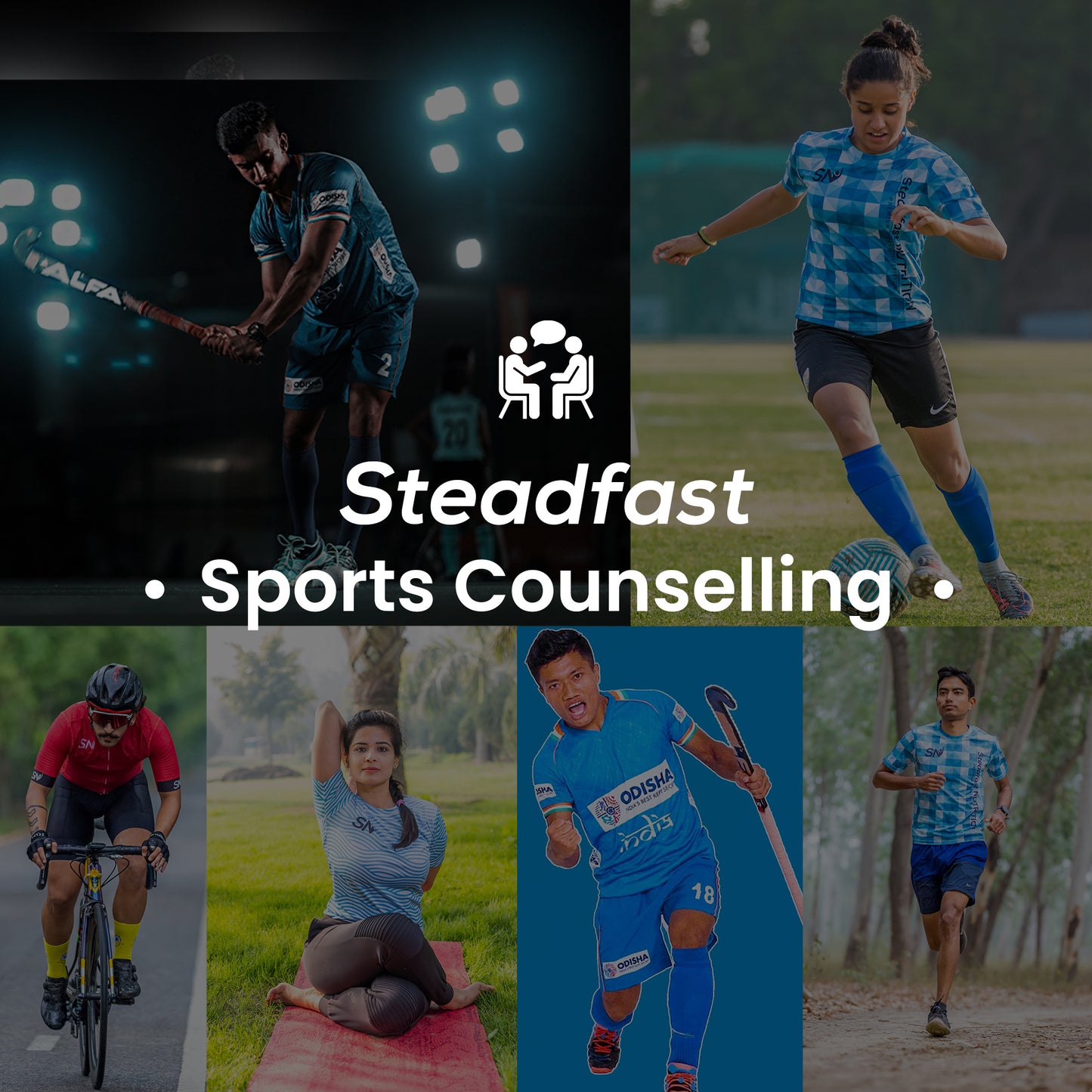
In our personalised 1-on-1 sports counselling sessions, we identify your specific psychological needs and build a structured mental training plan designed for competitive performance. Our work strengthens what we call the Athlete Triangle: the alignment between the Athlete, the Parent, and the Coach. When these three move in one direction with clear roles, communication, and shared goals, performance becomes consistent and sustainable.
Our approach integrates evidence-based psychological techniques such as cognitive behavioural strategies (to reshape unhelpful thought patterns), performance conditioning, visualisation and imagery training, attentional control drills, emotional regulation techniques, confidence-building frameworks, pre- and post-performance routines, and structured reflection models. Each plan is tailored to the individual.
We work with athletes aged 10 and above.
The Athlete
Every athlete has a unique mental profile and individual performance barriers. We identify specific psychological needs and teach structured mental techniques that strengthen focus, confidence, and composure under pressure. A key part of our work involves helping athletes deal effectively with personal setbacks, such as performance slumps, selection disappointments, injury recovery, loss of confidence, or fear of failure. Using cognitive behavioural tools, pressure-simulation training, and resilience conditioning, we help athletes reframe challenges, recover faster from mistakes, and maintain competitive consistency.
Each personalised session builds mental skills that improve performance reliability. Our holistic approach supports athletes in performing at their true potential — not just occasionally, but consistently.
The Parent
Parents create the emotional climate at home. Their responses to wins, losses, effort, and setbacks significantly influence an athlete’s confidence and long-term motivation. Being a parent is a major responsibility. In our personalised 1-on-1 counselling sessions, parents receive guidance on effective performance-supportive parenting. We help you understand pressure signals, communication styles, and emotional reinforcement strategies that strengthen your child’s mindset without unintentionally creating performance anxiety.
The Coach
A coach is an important part of an athlete’s life. A coach plays a defining role in shaping strategy, discipline, and competitive mindset. The way feedback is delivered and expectations are managed directly impacts an athlete’s performance under pressure.
In personalised sessions, we support coaches in refining communication methods, developing constructive feedback systems, and understanding athlete mindset patterns and pressure responses. We equip coaches with psychological insight to guide athletes effectively through setbacks, build mental toughness within training systems, and align strategy with mental conditioning for stronger performance outcomes.
When the Athlete, Parent, and Coach are aligned in clarity, communication, and direction, performance development becomes structured, consistent, and sustainable.
Frequently Asked Questions
1. What is sports psychology?
Sports psychology is structured mental conditioning that improves focus, confidence, emotional control, and performance under pressure. It applies evidence-based psychological techniques to enhance competitive consistency. It is practical, measurable, and performance-oriented.
2. Is this only for athletes with problems?
No. Sports counselling is not only for athletes facing difficulties. It is equally valuable for athletes who are already performing well but want to achieve consistent high performance and gain a competitive mental edge.
3. At what age can an athlete start?
Athletes can begin from 10 years onwards. Early mental training builds emotional regulation skills, confidence patterns, and competitive habits that create a strong foundation for long-term performance development.
4. Will this replace coaching?
No. Sports counselling does not replace technical or tactical coaching. Instead, it strengthens the impact of coaching by improving how athletes execute skills under pressure.
5. How is this different from coaching?
Coaching focuses on skill development, strategy, and physical preparation. Sports psychology trains mindset, emotional stability, and decision-making under competitive pressure. Both work together for complete athlete development.
6. How are parents involved?
Parents are guided on how to provide effective support without creating unnecessary pressure. They learn communication tools and behavioural strategies that reinforce confidence, effort, and resilience in their child’s sporting journey.
7. How does it help during competition?
It improves focus, emotional stability, decision-making speed, and recovery after mistakes. Athletes learn pre-performance routines and reset techniques that allow them to stay composed during high-pressure moments.
8. How many sessions are needed?
Typically, 6–12 structured sessions are recommended for visible and measurable performance improvement. The exact number depends on the athlete’s goals, sport demands, and competitive level.
9. Is it only for individual sports?
No. Mental conditioning benefits both individual and team sports equally. Focus control, confidence, communication, and pressure management are essential across all sporting environments.
10. Is this therapy?
No. This is performance training designed for athletes striving for excellence. While emotional awareness is developed, the primary focus remains competitive performance enhancement.
11. Can it help after injury or loss of confidence?
Yes. Mental recovery is as important as physical recovery. Structured psychological techniques help rebuild confidence, reduce fear of re-injury, and restore competitive rhythm.
12. Is it motivational speaking?
No. It is structured psychological skill training with practical exercises, measurable tools, and progressive mental conditioning strategies.
13. What results can we expect?
Athletes typically experience improved consistency, stronger confidence, better pressure management, faster recovery from mistakes, and long-term performance growth. Results are built progressively through structured mental training.
CANCELLATION POLICY
- 1-on-1 session bookings cancelled at least 48 hours (2 days) prior to the scheduled session are eligible for a full refund.
- However, cancellations made within 24 hours of the scheduled session will be refunded 40% of the booking amount.